
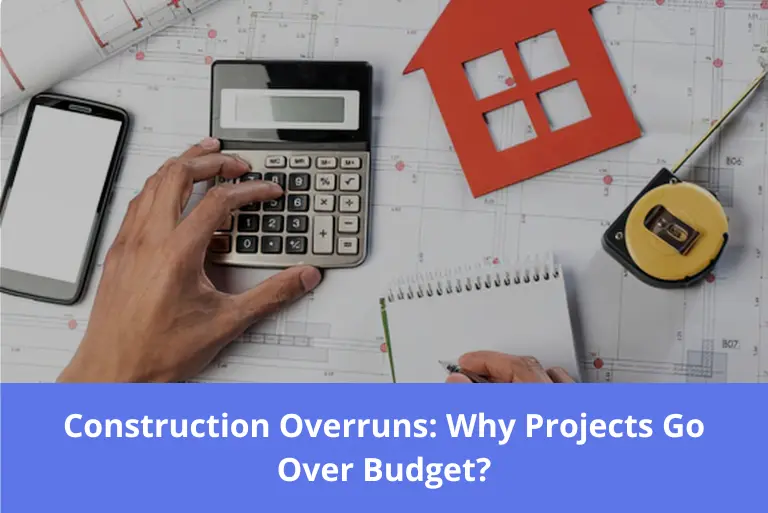
Construction projects rarely go over budget because of one major mistake. In most cases, the final overspend develops through a series of smaller problems.
An incomplete drawing creates a variation. That variation delays a subcontractor. The delay extends plant hire and site supervision. Materials must be stored for longer, while another trade charges for returning to site. Each cost may appear manageable, but the combined effect can turn a viable project into a budget crisis.
This problem affects domestic renovations, housing schemes, commercial developments, public buildings, and major infrastructure projects across the UK.
Recent evidence shows the scale of the challenge. Research cited by the Competition and Markets Authority found that 58 per cent of 48 UK road projects finished late. Where delays occurred, the average time overrun was 29 per cent. Among 27 railway projects, 56 per cent were late, with an average overrun of 27 per cent for delayed schemes.
In 2026, it is reported that fragmented procurement and uncertain investment pipelines were increasing infrastructure costs. Its recommendations highlighted external research suggesting that reforms to UK road and rail delivery could support savings of up to £5 billion each year.
Large infrastructure schemes are more complex than a house extension or office refurbishment. However, the underlying causes are often similar: unclear scope, optimistic estimates, incomplete design, weak risk management, and delayed decisions.
What is a Construction Cost Overrun?
A construction cost overrun occurs when the final project cost exceeds the approved budget or agreed cost baseline.
The baseline matters. A client may compare the final cost with an early feasibility estimate, while a contractor measures it against the accepted contract sum. These figures may cover different items.
An early estimate might exclude professional fees, VAT, surveys, utility connections, planning costs, loose furniture, finance charges, landscaping, or contingency. If these costs are added later, the project may appear to have overspent even though the original estimate never represented the complete financial requirement.
A reliable project budget should include construction work, consultant fees, investigations, statutory charges, utility work, inflation, client supplied items, VAT where applicable, and appropriate risk allowances.
Cost certainty starts with understanding exactly what the budget covers.
Why do construction projects go over budget?
1. The original estimate is unrealistic.
Many construction overruns begin before work reaches the site.
During feasibility, the estimator may only have an approximate floor area, a general specification, and a few concept drawings. This figure can support an initial decision, but it should not be treated as a fixed quotation.
As the design develops, previously undefined requirements become visible. These may include structural strengthening, drainage, fire protection, ventilation, acoustic measures, utility upgrades, external works, and higher-quality finishes.
The project has not necessarily become inefficient. It has simply become better understood.
Cost and programme assumptions can also be affected by optimism bias, which is the tendency to underestimate costs and completion times while overestimating expected benefits. Clients may assume that planning permission, design approval, procurement, and construction will proceed without interruption. This produces an attractive initial budget but leaves little protection against actual delivery conditions.
Using historical project data, comparable schemes, and realistic cost ranges can produce a more dependable estimate. The budget should then be updated as the design and available information develop.
2. The project scope is unclear
A vague scope creates assumptions. Assumptions eventually become additional costs or disputes.
Tender documents should define required work, quality standards, responsibilities, exclusions, and interfaces between different trades. If the information is incomplete, contractors may price the same project differently.
One tenderer may include drainage connections, temporary access, testing, decoration, and making good. Another may exclude them. The lower tender may therefore represent a narrower interpretation rather than better value.
Before seeking prices, the project team should confirm what will be delivered, who is responsible for each element, and how completion will be assessed.
3. Construction starts before the design is ready.
Starting work early can appear to save time. In reality, it often moves important decisions into the most expensive stage of the project.
A design change is relatively inexpensive while it exists only on a drawing. The same change can be costly after materials have been ordered or work has been installed.
Incomplete design may cause rework, wasted materials, aborted orders, disrupted sequencing, additional design fees, and extended site overheads. Mechanical, electrical, architectural, and structural information must also be coordinated to prevent clashes.
This does not mean every minor detail must be fixed before work begins. It means that critical layouts, service routes, structural principles, compliance requirements, and major specifications should be sufficiently developed for the chosen procurement route.
4. Clients request late changes
Variations are one of the most common causes of construction budget growth.
Some changes are unavoidable. Opening an existing structure may reveal defects, or building control may require additional work. Other changes are discretionary, such as upgrading finishes, moving walls, or changing kitchen and bathroom layouts.
The quoted price of a variation may not show its full effect. A change can influence design fees, material orders, completed work, access, testing, and the sequence of several trades.
Every proposed change should be reviewed for its total cost and programme impact before approval. A written change process also prevents uncertainty about whether informal conversations constitute instructions.
5. Site conditions are not investigated.
Construction takes place in uncertain physical conditions. Ground problems, contamination, asbestos, hidden services, drainage defects, structural damage, and restricted access can all increase costs.
Existing buildings carry particular risk because original drawings may be missing or inaccurate. Previous alterations may also conceal defects or noncompliant work.
Useful investigations may include measured surveys, ground investigations, drainage inspections, utility tracing, asbestos surveys, structural opening work, and access assessments.
Surveys cannot remove every unknown. They can, however, replace many expensive assumptions with usable information.
6. The programme is unrealistic.
Time and cost are closely connected.
A delay may extend plant hire, scaffolding, security, insurance, welfare facilities, project management, supervision, and temporary accommodation. It can also increase finance costs and expose the project to further inflation.
An unrealistic programme creates pressure from the beginning. Design information arrives late, trades compete for access, and quality can decline as work is rushed.
A credible programme should allow for planning, design development, Building Regulations approval, procurement, utility applications, seasonal conditions, testing, commissioning, and client decisions. It should also contain a reasonable float for uncertainty.
The shortest promised programme is not always the fastest achievable programme.
7. Lowest tender wins without proper analysis
A low tender may appear to protect the budget, but the initial price and the final cost are not the same.
An unusually cheap bid may contain errors, omissions, unrealistic allowances, or qualifications that later become claims. The contractor may also lack the staff, experience, or supply chain capacity needed to deliver the work.
Tender assessment should consider scope compliance, exclusions, programme credibility, financial stability, relevant experience, proposed personnel, methodology, and risk.
The objective is not to avoid competitive pricing. It is to identify which tender offers genuine value and the greatest probability of successful delivery.
8. Material and labour costs change
Construction prices can move between the first estimate, tender date, material order, and actual installation.
According to the Office for National Statistics, construction output prices increased by 2.7 per cent in the 12 months to December 2025.
Price pressure is not equal across every product. Structural steel, concrete, imported finishes, specialist glazing, mechanical equipment, transport, and skilled labour may follow different trends.
Material and labour costs can change between the initial estimate, tender submission, product order, and installation. In early 2026, surveyed UK professionals expected construction costs to rise by 6.6 per cent, material costs by 7.5 per cent, and tender prices by 5.6 per cent. This reinforces the need to include a realistic inflation allowance in the project budget.
Budgets should identify their price date and include an evidence-based inflation allowance for the expected procurement and construction period.
LiveCosts helps construction firms track project costs in real time, identify overspend early, and keep every project on budget.
9. Risk is allocated to the wrong party.
Some contracts attempt to transfer nearly every risk to the contractor. This can create the appearance of cost certainty, but a party cannot efficiently manage a risk it does not control.
A contractor may add a large risk premium, qualify its price, or rely on later claims. A smaller supplier may accept the risk to secure work but lack the financial capacity to absorb it.
The UK government recommends allocating risks to the party best able to manage them. It connects sensible risk allocation with more accurate prices, fewer commercial problems, and a lower likelihood of supplier failure
Each major risk should have a clear owner, mitigation plan, financial allowance, and review date.
10. Cost reporting is incomplete.
The amount paid to date does not show what the project will finally cost.
A useful cost report includes the original contract sum, approved variations, pending changes, anticipated claims, consultant fees, remaining risk allowances, and the forecast final account.
Pending items should not disappear from the report simply because their value has not been agreed. They should be included as the best current estimate, with an appropriate confidence rating.
The key question is not merely, “How much has been spent?”
It is, “What is the current construction forecast cost to complete the agreed scope?”
11. Poor communication delays decisions.
Construction projects depend on timely decisions about drawings, materials, quotations, samples, and technical information.
When responsibilities are unclear, approvals are delayed and contractors may continue based on assumptions. Informal instructions also create disputes because nobody can confirm what was authorised.
Every project should identify who can issue instructions, approve expenditure, accept design information, and escalate unresolved problems. A decision log can record each required decision, responsible person, deadline, and consequence of delay.
12. Defects create expensive rework.
Poor workmanship consumes labour, materials, supervision, and programme time. It may also prevent following trades from starting.
Quality problems often result from unclear information, rushed installation, inadequate supervision, unsuitable materials, or failure to inspect concealed work.
Inspection plans, sample approvals, photographic records, benchmark installations, and staged sign-off help identify errors while correction remains manageable.
How does LiveCosts improve construction cost control?
Cost overruns are easier to manage when spending is visible before the project reaches its financial limit. LiveCosts compares the original budget with actual and committed costs as work progresses.
Purchase orders are assigned to the correct project and cost code, allowing teams to see financial commitments before supplier invoices arrive. Three-way invoice matching also checks invoices against purchase orders and delivery records, helping identify incorrect prices, quantities, or charges before payment.
Live reporting provides a current view of labour, materials, subcontractor costs, work in progress, and project profitability. Integrations with Xero, Sage, and QuickBooks can also reduce duplicate data entry and improve financial accuracy.
By bringing this information together, LiveCosts helps contractors detect budget drift early, control procurement, and make informed decisions before a manageable variance becomes a significant overrun.
LiveCosts gives contractors complete visibility into project costs, helping teams catch budget issues early instead of after the invoice arrives.
What if the project is already over budget?
Begin by replacing the outdated budget with a realistic forecast of the cost to complete.
Separate the overspend into approved changes, pending variations, claims, inflation, design development, delay costs, and remaining risks. This identifies where action is still possible.
Freeze unnecessary changes, confirm the remaining scope, review the critical programme, resolve disputed variations, reprice outstanding packages, and update the cash flow forecast.
Value engineering may help, but indiscriminate cost-cutting can create defects and higher operating costs. Protect essential safety, compliance, quality, and maintenance requirements.
Conclusion
Construction overruns rarely occur without warning. They usually develop through optimistic estimates, unclear scope, late design decisions, weak site investigation, unrealistic programmes, poor risk allocation, and delayed cost reporting.
Effective cost control begins before construction starts. A clear brief, coordinated design, realistic budget, suitable contingency, and properly allocated risks provide a stronger financial foundation.
Once work begins, teams must track actual and committed costs, control variations, monitor warning signs, and respond quickly. LiveCosts supports this process by giving contractors clearer visibility of spending, commitments, and budget performance as the project progresses.

